
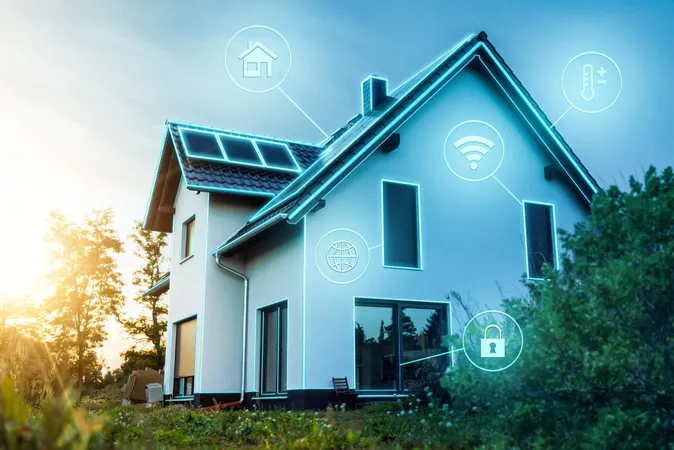
The Dawn of Intuitive Living Spaces
Imagine waking up not to the jarring sound of an alarm clock but to gradually brightening lights that simulate a natural sunrise, while your bedroom blinds slowly open to welcome the morning. As you stretch, your smart speaker gently informs you of the day’s weather, your calendar appointments, and how well you slept based on data from your mattress sensor. Before you even reach the kitchen, your coffee maker has already started brewing your preferred strength, and the thermostat has adjusted the temperature to your morning preference. This is not a scene from a futuristic film but a snapshot of daily life for millions of people living in smart homes around the world. The integration of connected devices into our living spaces represents one of the most significant transformations in how we interact with our environments since the introduction of indoor plumbing and electricity. Smart homes are fundamentally changing not just what we can do but how we think about our relationships with our living spaces.
Understanding the Smart Home Ecosystem
Before exploring how smart homes are changing our lives, it helps to understand what actually constitutes a smart home. At its simplest, a smart home contains internet-connected devices that can be monitored, controlled, and automated remotely. These devices communicate with each other and with you through a central hub or your smartphone, creating an interconnected ecosystem that responds to your presence, preferences, and commands . The scope of these devices has expanded dramatically in recent years, now encompassing lighting systems, thermostats, security cameras, door locks, appliances, entertainment systems, and even furniture.
The intelligence of a smart home lies not in any single device but in how they work together. A smart thermostat learns your schedule and temperature preferences, adjusting automatically to save energy while keeping you comfortable. Smart lights can be programmed to turn on when you arrive home and off when you leave. A smart lock can grant temporary access codes to guests or service providers and notify you when they come and go. When these devices share information and coordinate actions, they create a living environment that anticipates needs rather than simply responding to commands.
The market for these devices has grown explosively, with projections indicating that the global smart home market will reach $380 billion by 2028, growing at nearly 20 percent annually . This growth reflects not only technological advancement but also increasing consumer awareness of the benefits these systems provide.
Convenience Redefined
Perhaps the most immediately noticeable change smart homes bring is an unprecedented level of convenience. Tasks that once required physical presence and manual effort can now be accomplished from anywhere with an internet connection. Forgot to turn off the coffee maker after rushing out the door? A quick tap on your smartphone solves the problem. Want to make sure your front door is locked before going to sleep? A glance at your phone confirms it, and if it isn’t, you can secure it without leaving your bed.
This convenience extends to routine tasks that previously consumed small but significant portions of our time and attention. Voice assistants like Amazon’s Alexa, Google Assistant, and Apple’s Siri have become central to this transformation, allowing hands-free control of countless devices . Adding items to a shopping list, setting timers while cooking, adjusting the thermostat without getting up, and controlling entertainment systems with simple voice commands have become second nature to millions of users. The friction of daily life, those tiny inconveniences that accumulate throughout the day, diminishes significantly when your environment responds to your voice or anticipates your needs.
The impact is particularly meaningful for individuals with mobility challenges or disabilities. For someone with limited mobility, controlling lights, locks, and appliances by voice or through a tablet can mean the difference between living independently and requiring full-time assistance. Smart homes democratize access to living spaces, making them more navigable and usable for people of all physical abilities.
Energy Efficiency and Environmental Impact
Beyond convenience, smart homes deliver substantial environmental benefits through dramatically improved energy efficiency. The U.S. Department of Energy estimates that smart thermostats alone can save homeowners between 10 and 15 percent on heating and cooling costs, which translates to significant reductions in household energy consumption and carbon emissions . These savings multiply when combined with other smart devices.
Smart lighting systems ensure that lights are never left on unnecessarily, either through occupancy sensors that detect empty rooms or through schedules and automations that turn lights off at specific times. Smart plugs can eliminate standby power consumption, the energy that devices continue drawing even when turned off, by cutting power entirely when devices are not in use. Smart irrigation systems adjust watering schedules based on weather forecasts and soil moisture levels, preventing water waste during rainy periods.
The environmental benefits extend beyond individual households to the electrical grid itself. Some smart home systems can communicate with utility companies to reduce energy consumption during peak demand periods, helping to prevent blackouts and reducing the need for polluting peaker plants. As more homes adopt these technologies, their collective impact on grid stability and environmental quality grows significantly.
Security and Peace of Mind
Smart home technology has transformed home security from a reactive to a proactive proposition. Traditional security systems could alert you or authorities after a breach occurred. Smart security systems can help prevent breaches from happening in the first place and keep you informed about your home’s status no matter where you are.
Smart doorbells with cameras let you see and speak with visitors even when you are miles away. Packages left on porches can be monitored, and delivery notifications can alert you the moment a package arrives. Smart locks provide visibility into who enters your home and when, eliminating the uncertainty about whether doors were left unlocked or whether children arrived home safely from school. Smart cameras with artificial intelligence can distinguish between people, animals, and vehicles, sending alerts only when something actually warrants attention.
Perhaps most valuable is the peace of mind these systems provide. Traveling becomes less stressful when you can check in on your home anytime. Going to bed feels safer when you know your doors are locked and your motion sensors are active. Parents of young children gain reassurance from knowing they can monitor napping children from anywhere in the house. This psychological benefit, the reduction of worry and anxiety about home security, may be the most valuable outcome of all.
Health and Wellness Integration
An emerging frontier in smart home technology involves integration with health and wellness monitoring. Smart beds track sleep quality, heart rate, and breathing patterns, providing insights that can lead to better rest. Smart scales measure not just weight but body composition, syncing data to apps that track trends over time. Smart blood pressure monitors, glucose meters, and even smart toilets that analyze waste for health indicators are bringing medical monitoring out of the doctor’s office and into daily life.
For aging populations, this health integration carries particular significance. Smart home sensors can detect changes in routine that might signal health problems, such as reduced movement, irregular sleep patterns, or missed medication doses. Family members can receive alerts when concerning patterns emerge, enabling earlier intervention. Falls, a major cause of injury for older adults, can be detected automatically by some systems, with alerts sent to caregivers or emergency services.
The COVID-19 pandemic accelerated interest in these capabilities, as people spent more time at home and became more conscious of indoor air quality. Smart air purifiers, humidity monitors, and ventilation systems that respond to air quality readings have moved from niche products to mainstream considerations for health-conscious homeowners.
Entertainment Transformed
Smart homes have revolutionized home entertainment, creating immersive experiences that were unimaginable just a decade ago. Multi-room audio systems allow music to follow you through the house, with different zones playing different content or all synchronized to the same playlist. Smart TVs integrate with streaming services and voice assistants, making content discovery as simple as asking for what you want to watch.
The integration of entertainment with other smart home functions creates experiences that feel almost magical. Lights can dim automatically when you start a movie, then gradually brighten when the film ends. Doorbell notifications can pause your show so you don’t miss a moment while attending to a delivery. Morning routines can include brief news briefings from your smart speaker, keeping you informed while you prepare for the day.
Gaming has also been transformed, with smart home integration allowing gamers to create customized environments that respond to gameplay. Lights can change color based on in-game action, sound systems can create surround experiences without complex wiring, and voice control can handle game selection and system management without breaking immersion.
The Challenge of Privacy and Security
The same connectivity that enables smart home benefits also creates vulnerabilities that did not exist in traditional homes. Every connected device represents a potential entry point for malicious actors, and the proliferation of devices in smart homes multiplies these risks. Security researchers have demonstrated vulnerabilities in everything from smart locks to refrigerators to children’s toys, highlighting the importance of robust security practices.
Privacy concerns extend beyond hacking to the data collected by smart home devices. Smart speakers constantly listen for wake words, raising questions about what audio is recorded and who has access to it. Smart cameras capture video of everyone who enters your home, including guests who may not have consented to monitoring. Smart appliances generate detailed data about your daily routines, from when you wake up to when you cook dinner to when you go to sleep. Who owns this data, how it is used, and how long it is retained remain contentious questions without consistent answers across the industry.
Manufacturers have responded with improved security features, including encryption, regular firmware updates, and more transparent privacy policies. Consumers can protect themselves by changing default passwords, keeping devices updated, using strong Wi-Fi security, and carefully reviewing the permissions they grant to devices and apps. Understanding both the benefits and risks allows for informed decisions about which devices to bring into your home.
Interoperability and the Standards Battle
One persistent frustration for smart home adopters involves the challenge of making devices from different manufacturers work together seamlessly. Early adopters often found themselves managing multiple apps, struggling with incompatible protocols, and dealing with devices that refused to communicate with each other. The industry has made progress toward solving these problems, but challenges remain.
Several major initiatives aim to improve interoperability. Matter, a connectivity standard developed by the Connectivity Standards Alliance with backing from Apple, Google, Amazon, and others, promises to simplify smart home setups by ensuring certified devices work together regardless of manufacturer . The standard launched in 2022 and has gained support from hundreds of companies, though adoption takes time.
Thread, a low-power mesh networking protocol, complements Matter by providing reliable communication between devices without requiring a central hub. Together, these standards point toward a future where setting up a smart home resembles assembling furniture from different manufacturers, everything fits together even if the styles differ, rather than requiring all components to come from the same source.
Cost Considerations and Return on Investment
The cost of outfitting a home with smart technology has decreased dramatically as the market has matured. Basic smart plugs can be found for under $10, smart bulbs for under $15, and smart speakers for under $30. More comprehensive systems involving professional installation and integration naturally cost more, but the entry barrier has lowered substantially.
Calculating return on investment involves both tangible and intangible factors. Energy savings provide measurable financial returns, with smart thermostats, lighting, and appliances typically paying for themselves over time. Increased home security may reduce insurance premiums with some providers offering discounts for monitored systems. Convenience and quality of life improvements, while harder to quantify, represent real value for many homeowners.
For those selling homes, smart features increasingly influence buyer decisions. A National Association of Home Builders survey found that smart home technology ranks among the most desired features for homebuyers, particularly younger demographics. Homes with integrated smart systems may command premium prices or sell more quickly than comparable properties without them.
Smart Homes for Renters
Smart home technology is not limited to homeowners. Renters can enjoy many benefits through devices that install easily and remove without leaving damage. Smart plugs, bulbs, speakers, cameras, and even some smart locks designed for rental properties allow apartment dwellers to create connected homes without violating lease agreements.
The growing availability of smart appliances in rental properties also reflects changing expectations. New apartment constructions increasingly include smart thermostats, smart locks with temporary access codes for maintenance, and package delivery lockers with notification systems. As competition for tenants intensifies in many markets, smart features differentiate properties and command premium rents.
Aging in Place and Accessibility
For older adults, smart home technology offers the possibility of aging in place, remaining in their own homes rather than moving to assisted living facilities. The AARP reports that nearly 90 percent of adults over 65 want to stay in their homes as they age, and smart technology makes this aspiration more achievable .
Voice-controlled devices help those with mobility limitations control their environments without physical effort. Smart medication dispensers provide reminders and track adherence, alerting caregivers if doses are missed. Motion sensors can detect changes in routine that might indicate health problems and notify family members. Video doorbells allow residents to see and speak with visitors without navigating stairs. Smart stove monitors can automatically shut off burners left on accidentally, preventing fires.
These applications extend beyond aging populations to anyone with temporary or permanent disabilities. Accident recovery becomes less isolating when you can control your environment without physical effort. Chronic conditions become more manageable when monitoring happens continuously rather than during occasional doctor visits.
The Future of Smart Homes
Looking ahead, several trends will shape the evolution of smart homes. Artificial intelligence will make systems more predictive and less reliant on explicit commands. Your home will learn not just your schedule but your preferences, adjusting lighting, temperature, and music based on context and past behavior without requiring programming.
Increased integration with electric vehicles will treat car batteries as home energy storage, charging when rates are low and powering homes during peak demand or outages. Vehicle-to-home technology, already available in some markets, will expand as more bidirectional chargers enter the market.
Health monitoring will become more sophisticated and more integrated with healthcare delivery. Your smart home may alert your doctor to concerning changes in your vital signs, enabling earlier intervention. Prescriptions might be adjusted based on continuous monitoring data rather than occasional office visits.
Sustainability features will become standard rather than optional. Homes will generate, store, and manage their own energy, sharing excess with neighbors or the grid. Water conservation will be automated based on real-time usage data and weather forecasts. Materials and appliances will be designed for circularity, with components easily recycled or repurposed at end of life.
Conclusion
Smart homes are changing how we live in ways both obvious and subtle. The convenience of voice-controlled lighting, the peace of mind of remote security monitoring, the comfort of personalized climate control, and the savings of automated energy management represent clear benefits that millions already enjoy. Less visible but equally significant are the ways these technologies reshape our relationship with our living spaces, transforming homes from passive shelters into active partners in daily life.
The transition to smarter homes will not happen overnight, and it will not look the same for everyone. Some will embrace full automation with every device connected and coordinated. Others will adopt selectively, adding smart capabilities only where they deliver clear value. Both approaches are valid, and both will benefit from continued innovation and competition in this rapidly evolving space.
What matters most is that the technology serves human needs rather than the reverse. The best smart homes are not those with the most devices or the most advanced automation but those that enhance comfort, security, convenience, and connection without introducing complexity or anxiety. When technology fades into the background, responding intuitively to our needs without demanding our constant attention, it fulfills its highest purpose. That vision of intuitive, responsive, supportive living spaces guides the continued evolution of smart homes and the way we live within them.